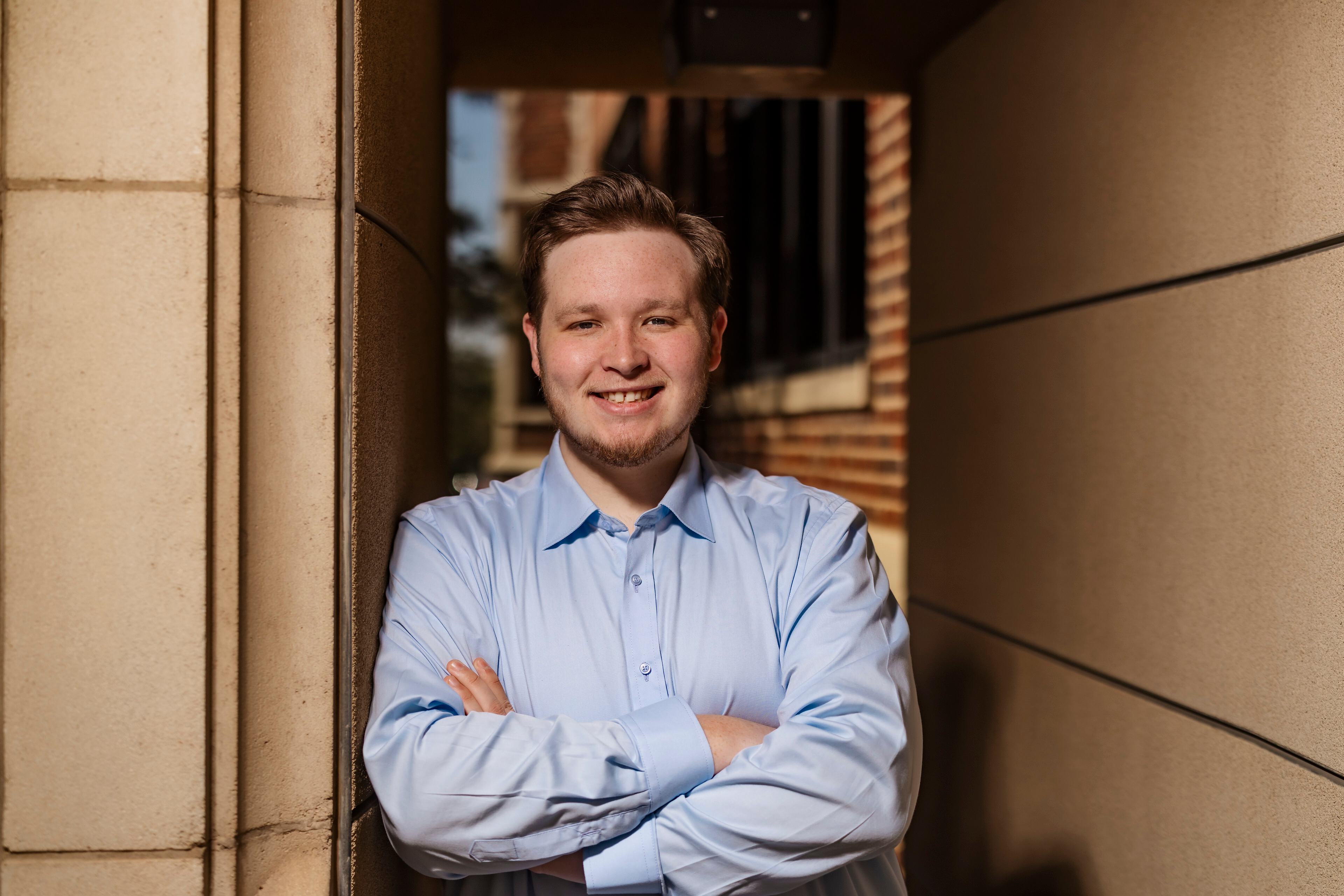
BY NICK TROUGAKOS
OCU COMMUNICATIONS
Crossing the stage at college graduation is typically a reflective moment for any student.
When Sonny Tabor takes his turn across the stage in the Freede Center this May, that reflection may go a bit deeper.
He鈥檒l think back to when he was in elementary school and his family was evicted from their home due to his parents鈥� opioid addiction. To when he lived with his mother, father and two brothers in a small SUV. To selling a favorite toy to a stranger in order to earn enough money to buy a fast-food hamburger for him and his siblings.
But then he鈥檒l think about his grandmother and the village of people around him at 野狼社区 University who helped him get to where he is now: A successful student, a campus leader, and the first in his family to earn a college degree.
鈥淚t may not seem to be a big deal to others,鈥� Tabor said, 鈥渂ut to me it is the signaling of a broken cycle. It will be a reminder to all the kids like me that their futures are in their hands.鈥�
Tabor, a political science and philosophy major and president of the Student Government Association at OCU, saw his future begin to be taken out of his hands in 2008.
Up until that point, he had lived what he described as a normal childhood, growing up with his parents and two brothers just south of Lake Stanley Draper. Then came his father鈥檚 rollover car crash.
The accident left Tabor鈥檚 father with a broken back and ribs, punctured lungs, and eventually, an addiction to the opioids that were meant to aid his recovery. Soon his mother fell into the grasp of painkiller addiction as well.
First his father鈥檚 truck was repossessed. Then he was told by his parents to pack his room because the family had to move.
鈥淟ittle did I know, we had been evicted, and this was the last time I鈥檇 ever experience my childhood as I knew it,鈥� Tabor said. 鈥淥ver the course of the next few months we were no longer going to school, and were living in drug-infested motel rooms.鈥�
His parents鈥� addiction drained the family鈥檚 resources to the point they could no longer afford motels. For a time, the family of five lived in an SUV.
鈥淢y parents avoided contact with family out of shame of their addiction,鈥� Tabor said. 鈥淎nd because we were transient, it was nearly impossible for family members to locate us to learn of the circumstances we were in or offer support.鈥�
Almost a year after Tabor lost his home, his maternal grandmother, Michelle Watson, was able to locate the family.
鈥淪he petitioned the court for emergency custody to ensure we could enroll in school and be provided the resources we needed, and thankfully this petition was granted,鈥� he said.
Tabor and his brothers moved in with their grandmother in the Choctaw area. His relationship with his 鈥渘ana鈥� the next 14 years 鈥� through elementary, middle and high school 鈥� came to define his life.
While his parents were in and out of jail and almost totally absent from their children鈥檚 lives, Watson gave the boys a safe space to process and understand what had happened to their parents.
鈥淒espite being single and low-income herself, (she) fought to give us as normal a childhood as possible,鈥� Tabor said. 鈥淚 reflect on my nana鈥檚 effort as a pivotal point in my development and reconciliation of my circumstances.
鈥淒espite the stress, grief, loss, and pain my parents caused her, she approached their addiction with compassion, healthy boundaries, and never sought to vilify them to my brothers and I.鈥�
With the stability provided by his grandmother, Tabor excelled in high school, earning valedictorian and admittance into a variety of top-tier colleges: the University of Oklahoma, the University of Texas, Baylor University, Tulsa University, and OCU. Tabor had dreamed for years of attending law school, so he applied to universities that have law schools.
When he embarked on the competitive scholarship interview process, OCU immediately stood out to him.
鈥淔rom the moment I had my interview at OCU I knew it was where I needed to be,鈥� Tabor said. 鈥淭here was a stark contrast in how personable my OCU interview was in comparison to my experience interviewing at the other universities. The interview panel was deeply invested in my story beyond a resume, and focused intensely on what OCU brought to the table for me, and not just what I brought to the table for OCU.鈥�
OCU Dean of Students Levi Harrel was part of the interview committee, and he said Tabor鈥檚 sincerity and clarity stood out.
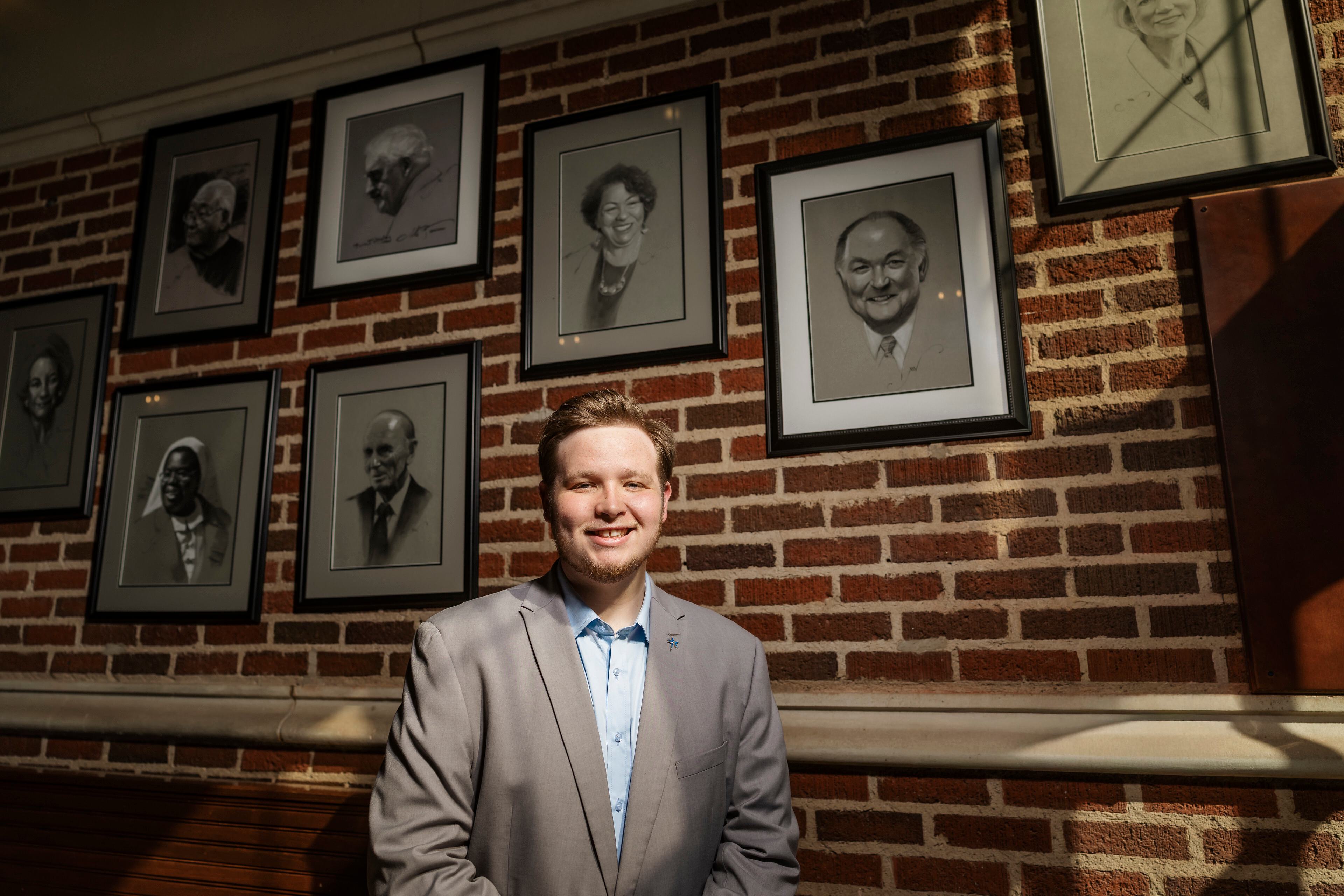
鈥淗is passion, drive, and authenticity came through in a way that left a strong impression on the committee,鈥� Harrel said. 鈥淔rom that first interaction, it was evident that Sonny possessed both the heart and the follow-through of a thoughtful and values-driven leader, with significant potential to grow and make a meaningful impact.鈥�
Tabor got the call that he had been awarded OCU鈥檚 Clara Luper Scholarship 鈥� essentially a full ride offer 鈥� while waiting to speak to an admissions counselor on the University of Oklahoma campus.
鈥淪afe to say, my meeting with the OU admissions officer was short-lived,鈥� Tabor said, 鈥渁s I already knew OCU would be where I鈥檇 call home for the next four years.鈥�
Now reflecting on those four years gone by, Tabor said he will be forever grateful for OCU and the people on campus.
鈥淏ecause this university chose to invest in a small-town kid who couldn鈥檛 possibly imagine what the future would hold, I have been able to broaden my horizons far greater than I ever thought possible,鈥� he said.
Still, Tabor鈥檚 time on campus has not been without challenges. It was difficult to move away from his grandmother, he said, and while his mother stopped using drugs after leaving incarceration in 2019, she fell into a pattern of alcoholism and abusive relationships that extended into Tabor鈥檚 first years on campus.
鈥淏eing away from family during these moments was difficult, but also taught me a lot about myself,鈥� Tabor said. 鈥淭he most stability came from the fact that as a Clara Luper scholar I lived with fellow Clara Luper scholars on the fifth floor of Walker Hall.鈥�
Tabor came to learn that several Clara Luper scholars shared similar life experiences.
鈥淚 was able to lean on them for support during trying times,鈥� he said. 鈥淭his was one of the first times in my life where I felt as though I had a friend group who truly understood what I was going through.鈥�
In May, Tabor and many of these same classmates will experience something else together: College graduation.
He said walking across the stage in Freede will be a moment to celebrate the hard work it took to make it this far.
鈥淚t will be a time of reflection and thanksgiving for the village around me,鈥� Tabor said. 鈥淚 would not be here without my family, friends, colleagues, classmates, professors, and mentors. OCU has brought so many important people in my life, who have played a huge part in my success.鈥�
Harrel said it will be deeply meaningful to see Tabor cross the graduation stage.
鈥淲hat stands out most is not just that he persisted, but how he chose to grow along the way,鈥� Harrel said. 鈥淩ather than allowing his experiences to harden him, Sonny has allowed them to soften and shape his approach to leadership. He leads with empathy, perspective, and a genuine care for others that is both rare and impactful.鈥�
Following graduation, Tabor said he still has his eyes set on law school, but perhaps with a detour first. He recently learned he鈥檚 been conditionally offered a placement in the Peace Corps. Pending his medical and legal clearance, he鈥檒l serve two years in the African nation of Botswana as a youth development facilitator.
鈥淚 will work with youth from adverse backgrounds to help them gain access to education, employment, and resources they need,鈥� he said. 鈥淎s I looked to my next steps after OCU, I knew that I wanted it to be filled with purpose, but also knew that good law students are often those with a bit more understanding of the world and experience under their belt. The Peace Corps seemed like a great fit to help use my life experience to assist those in need.鈥�
From there, he plans to take the LSAT and live out his dream of becoming an attorney, among many other future accomplishments.
鈥淚 hope to continue traveling the world. I hope to continue giving back in whichever ways I can, using the skills, knowledge, and experience I have been blessed with to bless others,鈥� Tabor said. 鈥淚 hope to become a father, and be the dad to my child that my dad couldn鈥檛 be for me. I hope to make people smile.鈥�
